
James Litz
“When I got appointed, I had no idea what we were going to do. But I thought I was king of the world.”
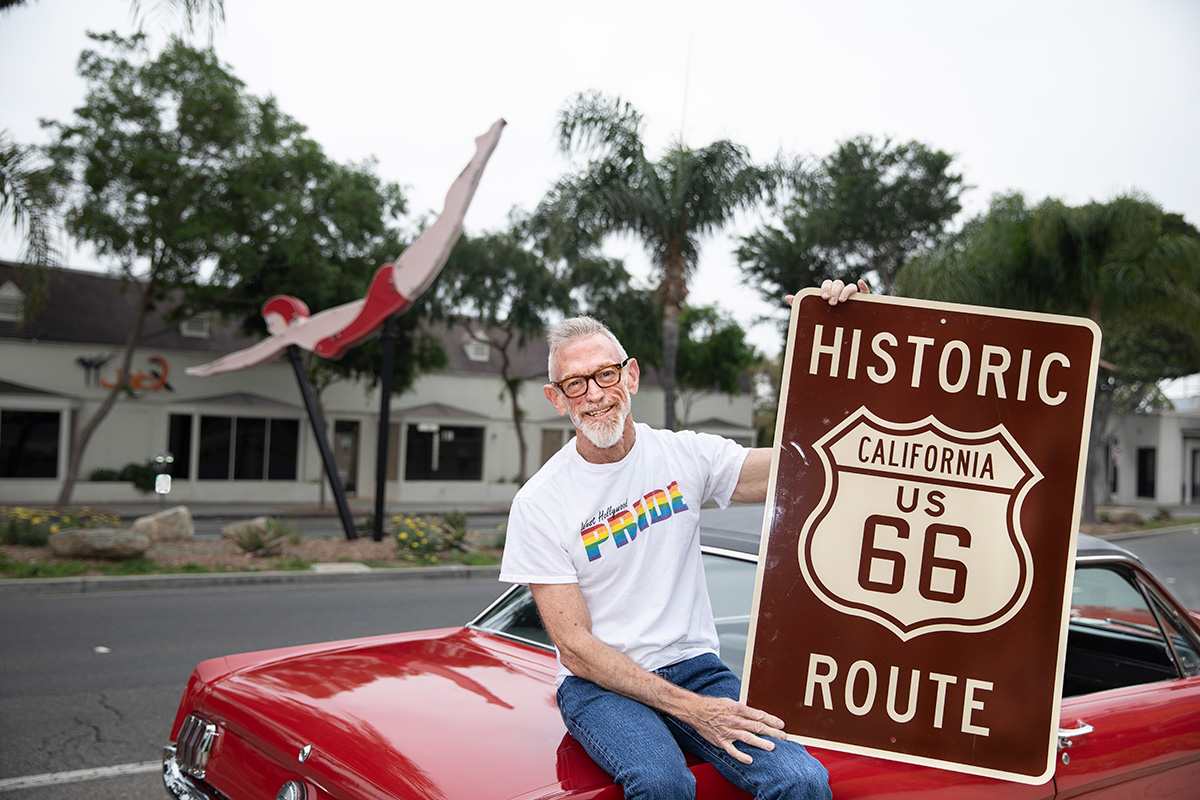
I was living in San Francisco, and there were a couple of things that made me uncomfortable staying there—the Harvey Milk and George Moscone assassinations, for one. And there was the Jonestown/People’s Temple thing. Around then, an opportunity to move to the Los Angeles area came up. I wanted to be in a place where I could walk to places. West Hollywood seemed like it would be comfortable, and it was where my people were—gay people. That was 1979.
When I moved into my first West Hollywood apartment at 8569 Holloway, I was told that my unit was where Sal Mineo had lived until he got murdered in our carport. I never believed that it was really Sal Mineo’s apartment until I got a 1099 form [Internal Revenue Service form] for him in the mail one day.
Back then, we had a newspaper here delivered to our door called The West Hollywood Post. I was able to keep up with the Cityhood campaign without really being involved. I thought local control was better than being part of the unincorporated county because the Los Angeles Board of Supervisors had no idea what West Hollywood was and how to manage it as an entity in and of itself. During the campaign, I saw a movement taking place and wanted to see how this new thing was going to create itself and be completely different from the City of Los Angeles and the unincorporated county area that it was before. When I heard the City Council was creating all these boards and commissions around 1986, I thought it was a chance for me to get involved with the City. I said to myself, “Let’s see which commission nobody will apply for, because I am a total unknown here.” I applied to the Public Facilities Commission and when I got appointed, I had no idea what we were going to do. But I thought I was king of the world.
At that time, I was a licensed realtor. I joined the Beverly Hills Board of Realtors, which also represented West Hollywood realtors, and served on their Local Government Committee. I started asking myself, “Why am I showing up to this? They have no idea what they are doing.” So I gave them a proposal to be their Government Affairs consultant. One year later, they called me out of the blue and hired me. I wanted them to learn how to operate in a rent-controlled environment, period. As a member of the renters’ rights organization, the Coalition for Economic Survival (CES), and a consultant to the realtors, my mantra was, “Rent control was a settled issue.” I told the Board of Realtors, “We’re not fighting rent control, so let’s talk about what you can change.”
I was on Public Facilities for, god, four years. I don’t remember. I helped usher in the first improvements to Plummer Park, the first strokes of improvement to West Hollywood Park, and the City street tree program. Trees are so important to a community because they give a city a much better appearance. After all that time on Public Facilities, I really wanted to be on the Planning Commission. I thought that was the place where I could make a difference in the future of the City. I’d gotten to know Councilmember Abbe Land pretty well by being involved with CES and through her campaign for City Council, so I set up a lunch to discuss an appointment—even though I thought she was committed to appointing women. I showed up to our lunch wearing a women’s wig and said, “If you want me to be a woman for this appointment, I will be a woman for this appointment, but I want this appointment.” After she picked herself off the ground from laughing so hard, we didn't talk about it anymore. She appointed me, and I was very proud that she did because she allowed me to vote how I thought was best—not how she wanted me to vote. Not all councilmembers were like that.
The Planning Commission was my bully pulpit. I had learned a lot about land use from Brad Crow, who was L.A. Mayor Tom Bradley’s Director of Economic Development and served with me on Public Facilities, and from Jeanne Dobrin, the land use activist. Jeanne said that land use decisions should be about the land itself, not whether a famous person is proposing a development project on it.
As a planning commissioner, I made applicants do a contextual drawing of how their development would fit into the street as it exists, so everyone could see how it fit into the surrounding area. I figured a lot of the negativity about development was because of misinformation, so the drawing would be useful. I eventually became chair of the Planning Commission and before each meeting, I would have dinner at the former Café Figaro on Melrose with the director of the Planning Department so I wouldn’t look like a fool when something came before me. I loved that place. They had a red potato and bacon spinach salad that was just so delicious. It closed down in 1997. After I stepped down from the Planning Commission, I set off on a new career path as a land use consultant. I partnered with former fellow commissioner Gene Smith. We helped businesses get permits and did entitlements for small projects in West Hollywood, like Zen—the medical marijuana company—and Urth Caffé.
We also did work as subcontractors and represented others, like Regency Outdoor Advertising, the billboard company. Gene and I spent many hours knocking on doors and holding community meetings to explain projects to residents. We thought community engagement was the most important part of getting a project approved—not just getting people to support it, but getting fewer people to oppose it. I think people showed up to these meetings because they realized that when they got involved in West Hollywood, their voices were heard. The level of community involvement here is one of the things that makes the City so successful. As long as we can keep people impassioned about what’s best for West Hollywood, I think we’ll be fine as a city.
West Hollywood has maintained its dynamic character over the years. But what we didn’t do for a long time was recognize its historic assets, like Route 66, which runs through Santa Monica Boulevard, and the world-renowned artist David Hockney’s former studio on the eastside, and costume designer Tony Duquette’s big studio near Pavilions supermarket on the westside of the City. Getting the City to recognize Route 66 was especially important to me because it is the road the LGBT people take to West Hollywood from all these oppressive places in the Midwest. Councilmember Sal Guarriello helped me get the City Council to place three Route 66 signs along Santa Monica Boulevard.
My favorite place in the City happens to be on Santa Monica Boulevard at San Vicente. That corner is the place where the community comes together spontaneously to celebrate or mourn something. When Proposition 8 lost—the ballot measure to ban gay marriage—that’s the place where the Gay Men’s Chorus went to sing “We’ve Only Just Begun.” It is also the place where the Yes on 8 campaign [the California ballot measure to ban same-sex marriage] placed their “Yes on 8” signs. I happened to be going to the gym at 4:30 a.m. one day and took down every single one of those signs. Not far from there, at the corner of Santa Monica Boulevard and Doheny Drive, was the Jose Cuervo sculpture. I thought it was just the ugliest piece of crap. I got the biggest “For Sale” sign that I could put on the sculpture and added City Hall’s phone number to the sign. Residents started calling City Hall complaining about the sculpture. When I told Abbe Land about it, she was not happy with me. She gave me that look that she gives me when she is upset. But I think after I put up the sign, it put people on a path to complain about the sculpture, which led the City Council to get rid of it. It just disappeared in the middle of the night.
Santa Monica Boulevard is one part of the City that has really changed over the years. It used to be that any high-end restaurant wouldn’t survive on Santa Monica Boulevard. Now we have restaurants like Bottega Louie. When I drive down Santa Monica Boulevard on a Saturday night, I just can’t believe how many people are out on the street now. It looks like the Sunset Strip used to look like back in the Gazzarri’s days when everybody was out on the street at two a.m. And it’s not all gay people anymore out on Saturday night. I think that’s a good thing.
I remember when so many businesses wouldn’t put West Hollywood as their address because they thought people wouldn’t come to a “gay city.” I’m glad Hornburg Jaguar is leaving because they never would acknowledge they were in West Hollywood. Even some of the big real estate offices up on the Sunset Strip said they were in Los Angeles. Today, it’s the opposite. There is a lot of investment now into places that aren’t exclusively gay. Coming from a small town, I have always loved that West Hollywood has had a diverse group of residents—Russians, seniors, et cetera.
I hope that we, as the older generation of City residents, are welcoming of the new generation that comes here, so they will want to get involved in the City, too. I hope I am handing off a better community that has kept our progressive ideals, protected our LGBT community, and made it safe for everyone to live here. I think we’ve made an inclusive, protective place for residents and businesses. We try not to dismiss anyone—until they’ve earned it.

