
Corey ROSKIN
“I saw a very interesting kind of collective coming together to make a city.”
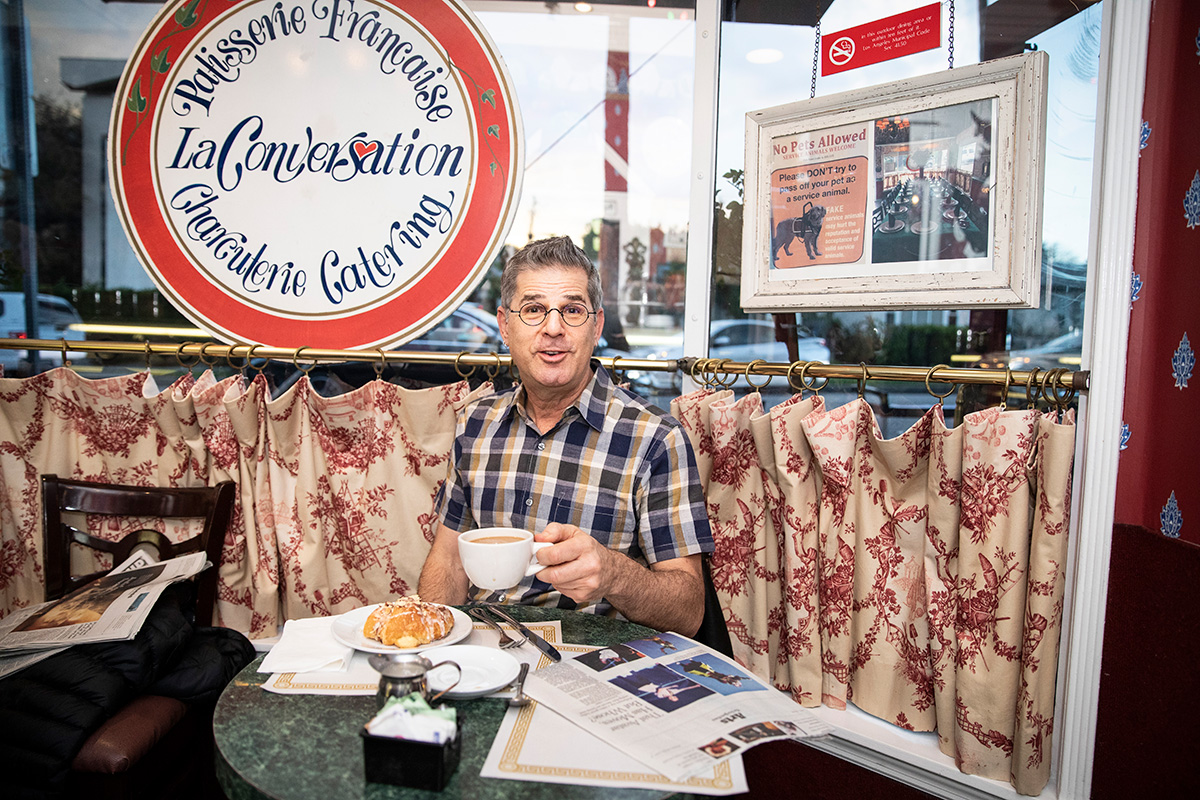
Over the years, I’ve had all kinds of intersections with West Hollywood. I wasn’t directly involved with the Cityhood campaign, but I definitely paid attention. I was coming to West Hollywood a lot—a gay guy going to bars and clubs, and working at the Pacific Design Center, which was the West Coast center of the design world. I found it interesting that all these demographics were behind Cityhood—the gay community, all the kinds of renters, and seniors. I thought that was pretty cool. I saw a very interesting kind of collective coming together to make a city. I’d never seen the process of making a city before. My partner and I moved to West Hollywood not long after Cityhood because we’d been hearing about the City from a friend, Ted Keto, who was the deputy to Councilmember Steve Schulte.
When I saw an announcement for a clerical job in the City’s Community Development department in 1986, I said to myself, “I’m going to apply.” I think being a gay guy, there was some appeal to working in an environment where I knew it was going to be comfortable. But beyond that, I was interested in the stuff the City was doing. All kinds of progressive things were happening. I thought it was pretty significant, the ways that the City was paying attention to welfare and social service-type programs, the stuff around HIV, the LGBT stuff, the stuff around the ways apartment dwellers were being protected, and a lot of focus on helping the big senior community. The City just felt exciting to me. It felt alive. It felt vibrant.
I got hired for the Community Development job and that was my entrée into City Hall. I got to know a little more intimately what was going on in the City. I liked the community feel of the City. I liked running into people, to a degree, outside of City Hall. I also liked it when I was not working, not to have to be a City employee. I was respectful with people who asked me stuff outside of work, particularly if it was in an area I worked in. But a lot of times, people wanted to talk to me about other stuff, and I’d say, “I'm off work now, I'm having a cup of coffee.” After a while, I got promoted to a job in Code Enforcement, but God knows why, because I hated the work—and I say that with pride.
The first years of Cityhood were fun and whacky, but also very intense. There were some wild personalities around City Hall that brought levity to the City. There was Ricky Brooks, with this teased blond hair, who was the City Hall receptionist who really was the face of City Hall. He had a big, warm personality and really cared about people. It's funny because a lot of people still say, “Years ago, there was a guy who used to work here” and everybody knows they’re talking about Ricky. One time a guy came into City Hall and threatened to rip off his clothes in the lobby. Well, he did rip off his clothes—he clearly had mental issues—so we called the Sheriffs, and they came, wrapped a blanket around him, and escorted him away. I’ll never forget the community’s reaction to the huge sculpture put up by Cuervo Tequila on the median strip at the end of Doheny Drive and Santa Monica Boulevard to commemorate people with AIDS. I actually didn’t mind it, but residents went rabid over it, and it became an election issue. Then, people started making comments about it that were kind of racist, because the artist was Latino and there was a little bit of an Aztec, Latin flavor to it. I was like, “Oh my God, really, that’s what people are going to make the campaign issue?” I thought, “What about food, clothing, shelter, development, public safety, road repair?” The City ended up getting rid of the statue.
During those same years, we saw a lot of gay men with HIV, AIDS, a lot of deaths, a lot of sickness. West Hollywood, at least near the beginning, became a heart of sorts for the gay community, particularly for a lot of gay men, not just living here but people coming here. I think the City really had an obligation—and did a lot to try to fulfill that obligation—to not only support people who lived here, but also people who came here and people who looked to the community for services, information, support, et cetera. The City’s support was a combination of money it gave toward programs and services that existed and creating new ones—like condom distribution and educational lectures. The City started working with prominent agencies like Being Alive and AIDS Research Alliance. It was—and is—incredibly collaborative with the social service agencies it funded, and it was incredibly hard to lose that funding once it was awarded.
During those early years of the City, everyone was trying to figure out how to help out with AIDS. I was doing a lot of volunteer work for AIDS Project Los Angeles (APLA) during this time, and I ended up leaving the City to work at APLA as a case worker. But with so many friends dying from AIDS, I got burned out at the APLA job after three and a half years and I went back to working for the City in the Social Services Division. I was passionate about providing social services and did a lot of different things in the division over the years. I helped create and oversee annual events—the West Hollywood Kids Fair, the Senior Health Fair [now called Older Adult Health Fair], and the City’s World AIDS Day events. I did a lot of events at the library. I love that place because it’s also a community space. In 2018, we started a really cool group there, Seniors in Action, that has fostered a little community of seniors that’s social and lecture-oriented, but not stodgy. We also do the Lesbian Speaker Series there, which I was in charge of, too.
But to me, the most important thing I did in the City was running the West Hollywood Book Fair. It started in 2002 out of Councilmember John Heilman’s idea to do some kind of book festival. I took it on with the City Council intern at the time, Roz Helfand, and we turned it into a smaller version of the L.A. Times Book Fair, which is one of the biggest in the country. Our goal was to be folksy and festive, important in the literary world, and get as many people as possible to come and see that West Hollywood is doing cool stuff. I wanted it to be clear that this wasn’t going to be a gay book fair but something for the entire community. Initially, it was like one of those Mickey Rooney/Judy Garland skits—let’s put on a book fair, let’s put on a show—and I contacted a few authors I had connections with. I asked Janet Fitch, who was at that time an Oprah pick, Sandra Tsing Loh, who used to be my neighbor in Los Feliz, and Jane Smiley, who had won a Pulitzer Prize. They all said yes right away. Over the years, we had these amazing authors—Gore Vidal, Neil Gaiman, James Ellroy, who wrote L.A. Confidential. Gaiman agreed to appear only for one hour because it was his only day off after thirty days of touring. He ended up staying for five hours. We also had some really fun celebrities participate, like Pamela Anderson, Florence Henderson, Stefanie Powers, and Dyan Cannon. Those were really, really exciting years for me, but after ten years, we said, “We are done with the Book Fair,” because the landscape had changed a lot in the literary world. The Book Fair went on for two more years. Five years later, people still ask me when the Book Fair is coming.
I think even bigger cities can learn a lot from West Hollywood. There is a spirit in West Hollywood where people have gotten themselves very involved in many, many different ways to create better community—whether it’s politically, whether it’s through social action, whether it’s through neighbor-to-neighbor stuff. The City succeeds because of our very active citizenry and the City Council has supported and nurtured this involvement from the beginning with boards, commissions, and focus groups to help assess community needs. I think this involvement has helped the City run better because there are a lot of interesting people who live here. It’s going to sound super corny, but any person can learn how to make a difference in their community—to make a city more livable—if you are that person who has a little bit of that motivation, who pays attention, who asks questions, and who shows up for things.
West Hollywood is not a little town that exists in its own little thing. It is still part of a metropolis. That's unavoidable. But to me, West Hollywood has always looked to new ideas. Creative thinking. Generally progressive thinking. Forward thinking. Those things still exist. But the City has changed since 1984. My favorite cafe, La Conversation, has closed down. The demographics of the City have changed a bit. We still have a big gay population, but the area of bars and restaurants on the westside of town that was once called “WeHo’s Boystown,” and now is called the “Rainbow District,” attracts a lot of straight people too these days. The City has become known as a fun hangout. The world-famous The Abbey, a bar and restaurant, is a perfect example. Straight women go there, straight couples, too. The change that I didn’t see coming was the amount of development the City has seen. I think the City Council saw development as a way to create more affordable housing after state laws weakened our rent control law.
I lived in West Hollywood for twenty-five years. I’ve retired from the City and moved to Palm Springs. West Hollywood is a community that has allowed me to be who I am, feel comfortable, and feel relatively safe. It’s just allowed me to experience a lot of different things culturally. I tried to be a caring, compassionate, dedicated member of West Hollywood. I’ve done a lot here as a resident, an activist and volunteer, and a City employee. Sometimes I was slinging the hash, other times I was more directly involved in helping to plan an event.

